

Every spring, summer, and fall, the streets around Atlanta’s major stadiums—State Farm Arena, Truist Park, and Mercedes-Benz Stadium—transform into a bustling river of traffic. For many fans, the night ends with a celebratory ride home, but for a small fraction, the joy turns into a legal nightmare. If you find yourself in an Atlanta DUI after game situation, understanding the dynamics of stadium DUI Atlanta arrests and how to defend yourself is critical.
1. Event-Night Traffic Patterns
Each venue has a distinct traffic footprint:
• State Farm Arena (Hawks) – Located in Midtown, cars swarm up Peachtree, Spring Street, and Ivan Allen Jr. Blvd. Traffic can build up for 2–3 hours after the game, especially if a championship is at stake.
• Truist Park (Braves) – A suburban stadium in Cobb County, with a large parking lot and the infamous “Giants” exit. The main arteries—GA-400 and SR-141—often turn into one-way streets as fans head toward Roswell or the suburbs.
• Mercedes-Benz Stadium (Falcons) – On the east side of the city, near the Beltline, the scene includes a mix of shuttle buses, rideshares, and a high volume of late-night traffic heading toward the I-75 corridor.
These patterns set the stage for numerous stops. Speeding, erratic lane changes, or even a sudden brake in a congested spot can trigger a police response.
2. Atlanta Police Department (APD) Presence
APD deploys a dedicated APD DUI arrest unit around game nights. They coordinate with local law-enforcement partners—Cobb County Police, DeKalb Police, and the Georgia State Patrol—to create a pervasive safety net. The officers’ tactics include:
• Installing temporary DUI checkpoints on main exit points.
• Using “traffic “scanning” plows that detect cars moving under the legal limit but with visible signs of impairment.
• Deploying “drunk driving observation” units that follow vehicles that exhibit suspicious behavior for 20–30 minutes before making an arrest.
Because of the increased manpower, even a minor driving error—a slow pause in a gridlock or a wrong turn—can lead to a stop.
3. Rideshare Confusion and Pedestrian Flow
After the final whistle, the surge to rideshares can create a “rush hour” effect. Drivers often face heavy traffic, leading to:
• Unexpected delays that may cause passengers to get out early to avoid being stuck on the curb.
• Passengers leaving vehicles at intersections, which can be mistaken for illegal open-container activity.
Pedestrian flow also affects traffic. Fans cross streets, sometimes ignoring crosswalk signals because the priority is closing the game. This creates a chaotic environment where even a well-timed car stop can trigger a misunderstanding.
4. How Minor Driving Errors Lead to Stops
Common triggers for a DUI stop on a game night include:
1. Speeding on a congested highway – Even 10 mph over the limit in a traffic-jammed area can raise red flags.
2. Sudden braking – An abrupt stop in the middle of a lane may indicate loss of control.
3. Erratic lane changes – Switching lanes repeatedly in a narrow stretch can look like impaired driving.
4. Failure to signal – In the confusion of post-game traffic, a driver may forget to signal when turning, which can be used against them.
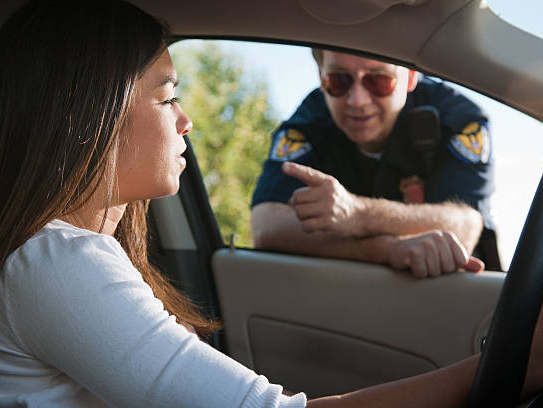
APD and its partners keep an eye on these behaviors. If they suspect impairment, they will often approach the vehicle for a portable breath test.
5. Portable Breath Tests vs. Intoxilyzer Results
APD officers use portable breathalyzers (e.g., Intoxilyzer 5000) to estimate a driver’s blood alcohol concentration (BAC). However, the device’s accuracy can be affected by:
• Temperature and humidity.
• Recent mouthwash or food consumption.
• Non-alcoholic substances that may interfere with the reading.
If the result exceeds the legal limit of 0.08 % in Georgia, the officer can issue a citation and detain the driver. Yet, the Intoxilyzer Atlanta system allows for a challenge:
“The device’s reading is only an estimate; a proper blood test is required to confirm BAC.”
Once the driver is arrested, a court can order a blood or urine test, which is often more accurate.
6. Camera Footage and Open-Container Issues
Many stadiums now have comprehensive camera coverage—traffic cameras, in-vehicle cameras, and even body-cam footage from officers on the scene. This evidence can be decisive. However:
1. Video may capture a driver’s face, but not necessarily proof of drunkenness.
2. Open-container laws in Georgia prohibit carrying an open alcoholic beverage within a vehicle, but they do not automatically lead to a DUI unless the driver is also impaired.
3. In some cases, a driver may be cited for an open-container violation and a DUI if the officer believes the open container indicates intoxication.
If the camera footage shows no evidence of erratic driving, a defense attorney can argue that the stop was unfounded.
7. The “Next-Day Checklist” – What to Do If You’re Arrested
8. Stay Calm and Comply
• Do not argue or resist. Comply with the officer’s instructions.
• Remain inside the car unless advised otherwise.
9. Record the Officer’s Details
• Note the officer’s name, badge number, and the exact time of the stop.
• Ask for the citation number and the case number.
10. Request a Copy of the Breath Test Results
• Ask for the raw data or the calibration sheet of the portable breathalyzer.
11. Contact James Yeargan Immediately
• Phone: 555-123-4567
• Email: [info@yearganlaw.com](mailto:info@yearganlaw.com)
• Website: [www.yearganlaw.com](http://www.yearganlaw.com)
12. Avoid Driving Until Court Date
• Georgia law requires you to surrender your driver’s license if you are charged with DUI.
• Driving without a license can add new charges.
13. Gather Evidence
• Collect any surveillance footage or photos of the traffic conditions at the time of the stop.
• Request the officer’s report and any documentation of the breath test.
14. Prepare for Court
• Meet with James Yeargan to review your case.
• Discuss potential defenses: improper breath test, procedural errors, or lack of evidence.
15. Potential Court Venues for Atlanta DUI Cases
• Fulton County Superior Court – Civil Court Complex, 2000 Peachtree Street NE, Atlanta, GA 30308
• Cobb County Superior Court – 4000 US-41, Austell, GA 30152
• DeKalb County Superior Court – 1000 Trade Center, Decatur, GA 30033
• Georgia State Police Court (for administrative hearings) – 1234 Peachtree Street, Atlanta, GA 30303
James Yeargan is experienced in all these venues and can guide you through the legal process, from pre-trial negotiations to a full defense strategy.
9. Strong Call-to-Action
Don’t let an evening at the ballpark turn into a lifelong burden. If you’re facing a staid DUI after a game, you need someone who understands both the law and the unique challenges of stadium DUI Atlanta cases.
Contact James Yeargan today for a free, confidential consultation.
Call Now: 555-123-4567 | Email Us
10. Final Thoughts
While the thrill of a Hawks, Braves, or Falcons victory is undeniable, the traffic aftermath carries a hidden risk. Understanding the nuances of APD DUI arrest procedures, recognizing how minor driving errors can trigger a stop, and knowing the steps to defend yourself can make the difference between a reversible citation and a lasting conviction.
In the high-stakes environment of stadium DUI Atlanta incidents, the right legal representation is essential. James Yeargan’s focused expertise on DUI defense in the Atlanta area means he can help you navigate the complex court system, challenge questionable evidence, and protect your rights.
Don’t wait until the next morning to reach out. Your future—your license, your finances, your freedom—depends on the actions you take today.
You May Also Like
Show CommentsClose Comments